
Bike Europe
  • Start free trial
  • Log in
  • News
    • Countries
  • Market Data
    • Market reports
  • Business
  • Production
  • Laws & regulations
  • Innovations
  • 中文部份

Laws & Regulations

Being successful in the bike business in Europe requires detailed knowledge of European laws and regulations for bicycles and bike products. Anti-dumping and anti-circumvention duties, CEN safety standards or the Generalized System of Preferences can have a huge impact on the success of a business. Here Bike Europe provides a comprehensive list of the current legislation and trade regulations in place, and important definitions.

  1. Five more years of anti-dumping duties on bicycles? EU initiates expiry review
  2. Signing of European Declaration on Cycling marks historic milestone
  3. Shifting gears: Europe's new standard for e-cargo bikes
What are the key-issues and assumptions of legislative topics currently on the agenda at the European Commission and relevant for the industry? – Photo Shutterstock

The legislative framework governing the European bicycle industry explained

All you need to know about..

  • Trade Regulations

    Trade Regulations

    9 items
  • Product Regulations

    Product Regulations

    25 items

Latest Laws & Regulations news

More Law & Regulations
  • "Trade compliance must have a seat at the decision table in order to get your landed costs right and achieve a competitive cost advantage," says Martin Langner, founder of Bike.Legal. – Photo Shutterstock
    Explainer16 Apr 26

    Why US tariffs are becoming a fixed cost for EU importers

    The United States Supreme Court decision to strike down US President Donald Trump's tariffs, followed by his swift executive order to implement new 10% tariffs, has thrown the global bicycle industry into disarray. In the wake of this political jockeying for control over imports and the billions of dollars they represent, European Union bike importers now face a complicated legal process to recover what they lost to the now-defunct IEEPA (International Emergency Economic Powers Act) tariffs.


  • For foreign importers like Riese & Müller, the US administration's decision not to subject the bicycle industry to high metal tariffs is sure to be a relief. – Photo Shutterstock
    Trade Regulations7 Apr 26

    US bike industry campaign brings end to proposed steel and aluminium tariffs

    A persistent and far-reaching campaign by the United States trade organisation PeopleForBikes to prevent bicycles and e-bikes from becoming subject to high metal tariffs has paid off. US President Donald Trump announced in early April that the bicycle industry would not be subject to the new Section 232 steel and aluminium tariffs, which would have cost manufacturers millions on imported steel and aluminium products.

  • “Geolocation data, purchase history, or ride telemetry, despite not directly falling under ‘special category personal data,’ can nevertheless be highly invasive and pose serious risks to individuals,” lawyer and GDPR expert Paolo Balboni told Bike Europe. – Photo Shutterstock
    Explainer10 Mar 26

    Why data governance is becoming critical for the connected bike industry

    The bicycle industry is entering a new phase of digital maturity. Connected e-bikes, rider apps and smart diagnostics are generating unprecedented volumes of user data, turning bikes into "a data collector on wheels." Bike Europe sat down with Paolo Balboni, an expert European lawyer specialised in privacy, data sharing and cybersecurity law, to better understand how companies can mitigate risk and stay compliant.

  • Due diligence obligations for electric vehicle batteries in the European Union become enforced 18 August 2027. – Photo Shutterstock
    Battery directive20 Feb 26

    Preparing for 2027: The EU Battery regulation timeline for the e-bike sector

    As the e-bike industry prepares for the impending battery regulatory overhaul in the European Union, readyness and compliance are becoming increasingly important topics. Bike Europe has created a working timeline of key deadlines related to the battery regulations to support companies as they position themselves within the new framework.

  • The full Digital Battery Passport, including comprehensive data on performance, durability, and raw material sourcing, becomes mandatory in February 2027. – Photo Shutterstock.
    Battery Regulation18 Feb 26

    Clock ticking for battery passports as compliance date enters final year

    Starting 18 February, 2027, the European Union will mandate a digital battery passport for all light means of transport (LMT) batteries, including e-bikes, to enhance sustainability and traceability. This digital record, accessed via QR code, will contain detailed information on the battery's composition, carbon footprint, technical performance and lifecycle. With one year to go, various solutions and regulatory clarity for the e-bike market are beginning to take shape.

  • The EU-India FTA will create new business opportunities for companies on both sides. – Photo Shutterstock
    Trade Regulations3 Feb 26

    EU-India Free Trade Agreement makes bicycles cheaper on both sides

    The European and Indian bicycle industries have always maintained close ties, although the trade volume remained relatively low. This might change drastically now: after almost 20 years of difficult talks, the Free Trade Agreement was agreed on 27 January in New Delhi. It's the biggest deal ever made by either side, which has also been eagerly awaited by the bicycle industry.

More Law & Regulations

Key markets

Country page

The Netherlands

Country page

Germany

Anti-dumping

More Anti-dumping
  • DuTech Holdings Limited is a leading global systems manufacturer of security technology and ticket vending machines, and has ventured into the bicycle industry. – Photo Sprick Rowery
    Mergers & Acquisitions16 Mar 26

    DuTech Holding building a new conglomerate in the bicycle industry

    Singapore-based DuTech Holding Ltd. is rapidly snapping up a series of companies in the bicycle industry. As a global player in cash-handling machines (ATMs), the company is now also eyeing the bicycle industry, particularly in Europe. As the bicycle industry's financial position has remained weak since the aftermath of the pandemic, this strategic investor is a welcome guest for many companies.

  • The European Commission did not get any response from the Chinese government to its questionnaire as part of the review on the anti-dumping duties. - Shutterstock/AI generated
    Trade Regulations30 Oct 25

    EU's anti-dumping duty extension on Chinese bicycles draws mixed reactions

    BRUSSELS, Belgium - The European Commission announced that the European Union will continue to apply the existing import measures, such as import duties or anti-dumping measures on bicycles from China, as there is no valid reason to lift them. To prevent circumvention, the European Commission considers it necessary to apply these duties to all bicycles made in China, plus all shipments from seven countries. A total of 13 bicycle manufacturers across these countries are exempt from this measure.

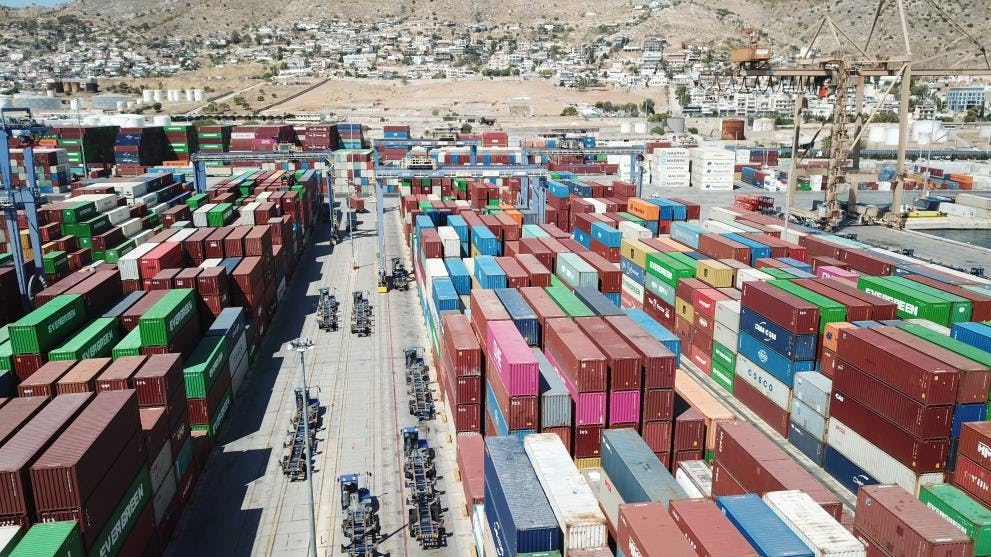
  • At the Port of Piraeus in Greece, over 2,000 shipping containers were seized by the European Public Prosecutor’s Office in an investigation into import fraud of Chinese e-bikes to the EU. – Photo EPPO
    Anti-dumping16 Sep 25

    Six arrested as e-bike anti-dumping case Calypso develops

    ATHENS, Greece - A coordinated raid by the European Public Prosecutor's Office in June 2025 has resulted in the arrest of six individuals, the seizure of 2,435 shipping containers and an estimated €250 million worth of e-bikes, textiles and footwear. Customs officers were among those arrested. Since the raid, Greek customs authorities have reported higher compliance, with importers at the port of Piraeus declaring similar goods at prices closer to their actual value.

  • An unprecedented number of e-bikes were seized in warehouses across France in the latest crackdown on fraudsters trying to skirt anti-dumping duties and taxes. – Photo DNRED
    Anti-dumping2 Sep 25

    French authorities uncover 'unprecedented' e-bike fraud network

    MONTREUIL, France - French authorities have uncovered a vast financial fraud network in a large-scale investigation that involved over 70,000 Chinese-made e-bikes across six storage sites in the country. The losses amount to €6 million.

More Anti-dumping

Blogs

More blogs
  • "The OEM reality: disconnected bikes are a dead end", writes Timo Saabas.
    blog24 Dec 25

    'Connectivity is no longer a feature. It is a baseline'

    TALINN, Estonia - "One of the most important mobility tools of our time, affordable, sustainable, and perfect for modern cities, is stuck in an analogue mindset. The cycling industry keeps polishing mechanical parts while the rest of the world has moved on," connectivity specialist Comodule wrote in a recent blog. The company laments at how e-bikes are creating a smoother commute, "but the bike itself is disconnected and largely dumb."

  • "Regulations should be made for the products of tomorrow, not what’s on the market now"  – Photo Bike Europe
    blog23 Dec 25

    'In e-bike classification debate, requests from specific user groups can't be ignored'

    AMSTERDAM, the Netherlands - The e-bike is evolving rapidly and new user groups are entering the market, writes editor-in-chief Jan-Willem van Schaik in his editorial. "The question is whether the e-bike can keep the same classification and will continue to be seen as a bicycle. The classification as a bicycle has important legal implications."

  • Image Shutterstock
    blog16 Dec 25

    'Pack your stuff: how Europe's next regulation is demanding industry's attention'

    While the long-awaited GPSR guidelines have finally appeared, offering disappointingly little clarity, the next regulation is already lining up for everyone involved in selling products in the EU: the Packaging and Packaging Waste Regulation (PPWR). The PPWR entered into force on 11 February 2025 and will start to apply from 12 August 2026, with many design and documentation obligations ramping up further between 2026 and 2030. Just as companies are still implementing the GPSR, the PPWR is already demanding attention.

  • blog8 Apr 25

    Blog: Risky business

    As the dust settles after December 13, 2024 - of course you all know by now that's the date when the General Product Safety Regulation (GPSR) came into effect - numerous ambiguities remain. Flaws, gaps, and even loopholes are crying out for more clarity. At the time of writing this blog, we are still awaiting the European Commission's guidance document, which is expected to provide some of this much-needed clarity.

More blogs
  • Group Subscription
  • Newsletters
  • Advertise
  • Customer service
  • Contact
  • About us

Sections

  • News
  • Countries
  • Market Data
  • Market reports
  • Business
  • Laws & regulations
  • Innovations
  • 中文部份

Follow Bike Europe

  • Facebook
  • x
  • LinkedIn
  • Instagram
  • WeChat
  • YouTube

Online products

  • Digital magazine
  • Online magazine
  • Whitepapers

Bike Europe is a part of VMNmedia. The following rules apply to the use of this site: Terms of Use and Privacy / Cookie Statement | Privacy settings