RECYCLING magazine
  • Subscribe
  • Log in
    • en
    • de
  • Markets & Industries
  • Politics & Law
  • Science & Technology
  • Magazine

Politics & Law

The focus here is on national and European legislation, regulations, circular economy strategies, and support programs. We analyze regulatory changes and highlight their impact on companies in the industry.
  • Politics22 Apr 26

    Ambitious, but not yet sufficient

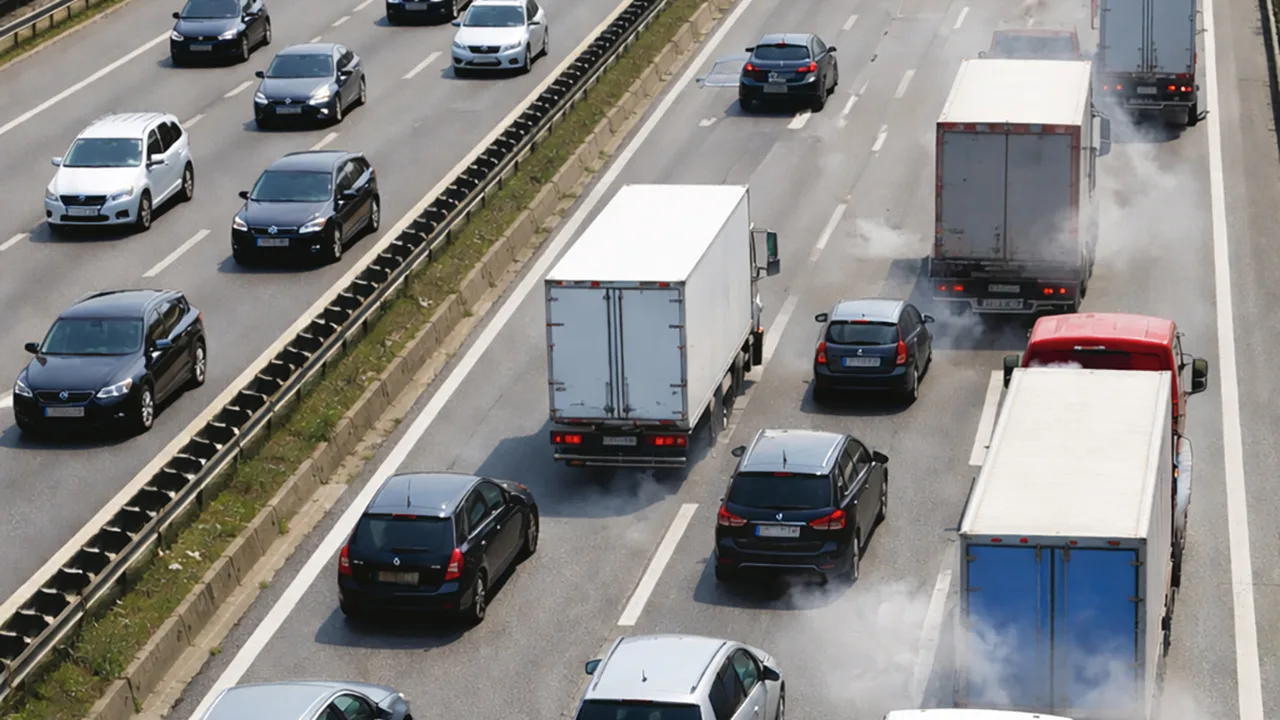
    With the Zero Pollution Action Plan, the European Union is pursuing the goal of reducing environmental pollution to a level that is harmless to humans and nature by 2050. The mid-term review presented by the European Commission shows that significant progress has already been made in individual areas, but at the same time structural deficits in implementation, governance and policy integration remain.

  • Politics22 Apr 26

    Circular economy as a fig leaf

    The report "Nature Positive: Role of the Technology Sector" presented by the World Economic Forum positions the digital and technology industries as potentially key players in the protection of biodiversity and natural resources. The report is embedded in the international "Nature Positive" narrative, which has increasingly served as a guiding principle for business and politics since the Kunming-Montreal Global Biodiversity Framework. According to the report, the tech sector should not only reduce its own environmental impact, but also contribute to the ecological transformation of other industries through digitalisation, data availability and efficiency gains. This perspective is ambitious - and of immediate importance for the circular and waste management industry.

  • Politics25 Mar 26

    Smart waste instead of rigid systems

    Increasing waste volumes, ambitious recycling quotas and growing cost pressure pose funda-mental challenges for municipalities and waste management companies. Artificial intelligence and the Internet of Things are opening up new ways to make collection, sorting and material flow control more efficient, transparent and sustainable. The study "Revolutionizing urban solid waste management with AI and IoT: A review of smart solutions for waste collection, sorting, and recycling" by a Saudi Arabian scientist shows how digital systems can evolve from an addi-tional technological benefit to a strategic key for the circular economy.

25 March 2026

  • EU25 Mar 26

    Turbo or snail's pace?

    And once again, the EU wants to speed things up. This time, the "Industrial Accelerator Act" is to be about selected industrial sectors. The main focus is on public procurement and approval procedures.

  • EU25 Mar 26

    Circularity as an industrial policy of the future

    Where does Germany stand in terms of the circular economy and what about the European goals? The Bertelsmann Foundation's study "Circular Economy Strategies of the EU and Germany in Comparison" examined the status quo in Germany. In addition, it was examined whether the German targets correspond to those of the EU.

  • Politics25 Mar 26

    Separate fees for separate destinations

    Extended producer responsibility is considered the backbone of European recycling policy. But while collection and recycling rates are increasing, waste volumes continue to grow, while reuse and repair remain structurally underfunded. As part of the planned Circular Economy Act, Zero Waste Europe pro-poses a fundamental realignment of extended producer responsibility in the policy brief "Extended Pro-ducer Responsibility (EPR) for waste reduction".

  • Politics25 Mar 26

    Construction is becoming a CO₂ risk factor

    Global construction activity is one of the central drivers of global resource consumption and the associ-ated greenhouse gas emissions. While the international community has formulated the goal of limiting global warming to well below two degrees Celsius with the Paris Climate Agreement, the CO₂ footprint of the construction sector has been rising dynamically for decades. The discrepancy between political ambi-tion and real development could become a crucial bottleneck in the coming decades. The study "Carbon footprint of the construction sector is projected to double by 2050 globally" by scientists from China, Germany, the Netherlands and Austria shows that the sector alone could be sufficient to consume the remaining CO₂ budget for the 1.5 degree target, even if other industries were fully decarbonised. The study was published in "Communications Earth & Environment".

15 February 2026

  • EU15 Feb 26

    EU rules accelerate China's transformation

    The EU is consistently aligning its plastics industry with recyclability and creating binding standards with new requirements on recyclability and the use of recyclates that have a global impact. For China, as one of the largest exporters to the EU, this means that products and packaging will have to be competitive in the future not only in terms of price, but above all with regard to regulation. In their report "Impact of EU recycling regulations on China's key packaging-intensive export sectors", ICIS and CPCIF show how Europe's regulatory framework is evolving into a global benchmark that is reshaping production and material decision-making in Chinese companies.

  • Plastics15 Feb 26

    Definitional divergences

    Plastics are indispensable materials, but they can cause significant environmental problems if not disposed of in the proper manner. With the social and political pressure to reduce plastic waste, the importance of clear definitions of terms is growing, because what is considered "plastic" can vary, depending on the context. In the UK, this fact has led to different regulations: the Single Use Plastic Ban (SUPB) aims to prevent littering, the Plastic Packaging Tax (PPT) is intended to encourage circularity. Both are based on the REACH regulations, but differ in their treatment of natural polymers. This discrepancy has created uncertainty, especially for manufacturers of bio-based and biodegradable materials. The article "Plastic definitions in UK regulation" by BB-REG-NET examines how such definitional differences influence the development of a circular economy and points out ways to achieve coherent, innovation-friendly regulation.

  • Reuse15 Feb 26

    Symbolic politics with side effects

    From a political point of view, the concept of reuse is highly valued, but insufficiently anchored in both legal and operational terms. It intervenes in established material flow and business models, but without being backed up by clear specifications, incentives or responsibilities. For the waste management industry, this creates conflicting goals, additional costs and a certain degree of uncertainty. The question of whether reuse targets actually bring about real waste avoidance or merely have a symbolic political effect therefore remains open. In the report "Targets for reuse and preparing for reuse in the European Union", the Belgium-based NGO RReuse has examined current reuse practices and possible new designs.

  • EU15 Feb 26

    Between strategy and implementation

    The study "Unpacking policy coherence: a network analysis of the EU policy mix for the circular economy" conducted by researchers from Belgium and the Netherlands examines the coherence of EU policies regarding the circular economy from the perspective of economic actors. The study was published in the journal "Sustainable Production and Consumption".

  • Resource management15 Feb 26

    Thinking Europe in circles

    Europe is facing ecological and social crises that are pushing the linear economic model to its limits. However, the circular economy concept offers solutions: it reduces emissions and resource consumption, strengthens resilience and creates social opportunities. Cities play a key role in this endeavour, as they bundle resource flows and control decisive levers through public procurement and infrastructure. In order to exploit their potential, cities need clear framework conditions and political support. The article "Policy Brief on Accelerating the Circular Economy for a Prosperous and Competitive Europe" presents the priorities of the Circular Cities Frontrunner Group and derives recommendations for both policy and practice.

  • Climate proctection15 Feb 26

    Redesign instead of symbolism

    The reduction of greenhouse gas emissions is a central goal of international climate policy. The circular economy promises to make an important contribution here, as it combines resource conservation and climate protection. But not all practices work the same: While preventive approaches such as product design can reduce emissions, other measures sometimes lead to unexpected effects. The report "Unpacking Circular Economy Practices and Carbon Emissions Relationships: Co-benefits and Legitimacy Perspectives" examines which strategies are actually effective and how theoretical perspectives help to better understand their impact. The report was published in "Business Strategy and the Environment".

  • Climate proctection15 Feb 26

    What makes climate policy reliably effective

    Assessing the effectiveness of climate policy measures is becoming increasingly difficult as countries continuously expand their climate policies and increasingly complex policy mixes emerge. Today, individual instruments hardly seem isolated, but embedded in dense constellations of parallel measures. In the study "Effective climate policies for 'all seasons': novel evidence from 40 countries", scientists from Spain, Switzerland, Germany and Norway develop a methodological approach that can nevertheless be used to identify robust effects of individual climate policies. On the basis of a comparative analysis of several countries, sectors and policy areas, those measures are determined that reliably contribute to the reduction of CO₂ emissions, regardless of the specific policy mix. The study was published in "Climate Policy".

  • EU15 Feb 26

    So far without a good plan

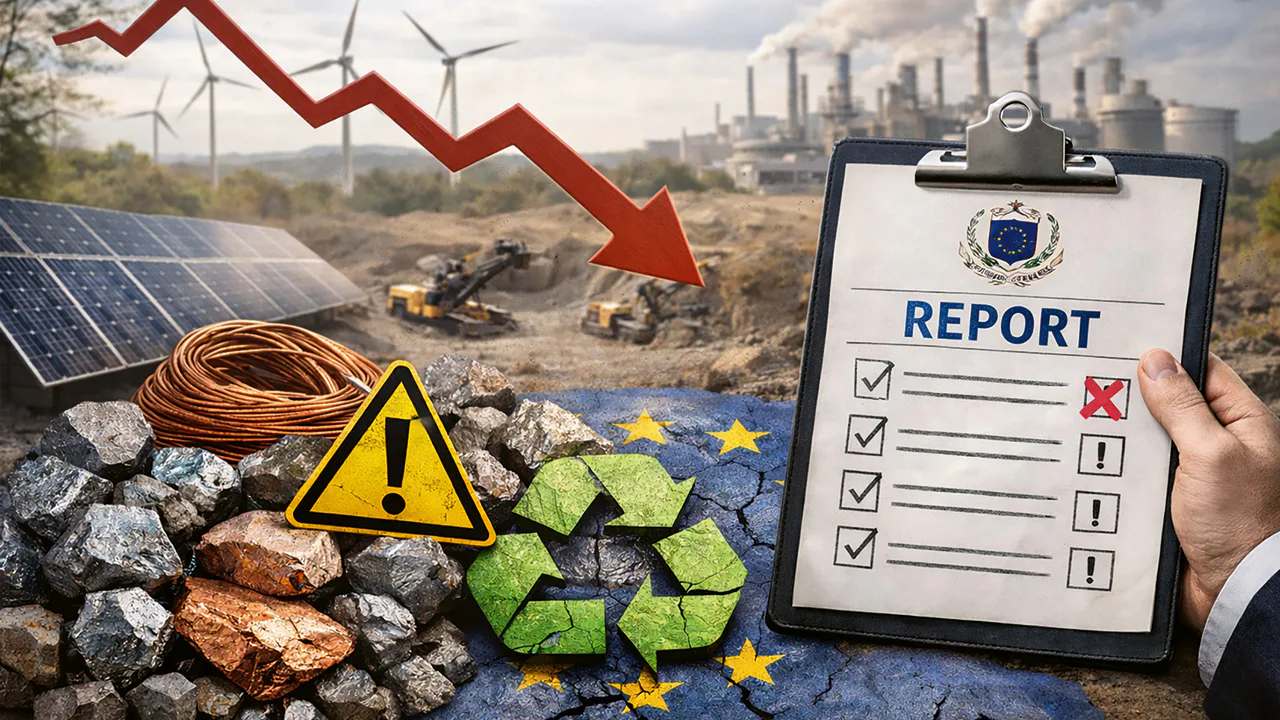
    Renewable energies are a key factor in the EU's ambitious climate targets. The technologies required for this require a number of critical raw materials. Currently, the EU is largely dependent on imports. The Union has taken a number of measures to improve the security of raw material supply. In its special report "Critical raw materials for the energy transition: no solid strategy in place", the European Court of Auditors has examined how successful these measures have been so far. The title of the report already says everything about the result.

15 January 2026

  • EU15 Jan 26

    Recycling is structural policy

    The circular economy is considered a key concept for permanently decoupling economic growth and resource consumption. Municipal recycling in particular plays a central role in this context. The political goals are correspondingly ambitious. In fact, however, a clearly differentiated picture emerges. Some Member States are already well above this target, while others are making little progress despite political efforts. The question of which structural framework conditions promote or inhibit recycling performance is thus becoming increasingly important. The study "Municipal waste recycling in the EU: a multi-method analysis of determinants and country profiles (2005-2023)" by Slovak scientists has for the first time comprehensively examined these relationships for all EU member states in the period 2005 to 2023. The study has been published in "Frontiers in Environmental Science".

  • EU15 Jan 26

    Waste is managed, not avoided

    The European Union's 8th Environment Action Programme is the first legally binding, long-term framework that systematically brings together environmental, climate and resource protection and is backed up with concrete targets for 2030. The annual monitoring of the EEA makes it visible whether Europe is actually moving from a predominantly linear economy to a resource-efficient, regenerative economy.

  • EU15 Jan 26

    From emissions trading to a circular economy

    Since 2005, the European Emissions Trading Scheme (EU ETS) has been the central instrument of European climate policy. It should ensure that greenhouse gas emissions are reduced where this is most cost-effective. After two decades of experience, it can be said that the system has achieved measurable emission reductions in most of the sectors involved. At the same time, however, it becomes clear that emissions trading alone is not enough to drive the comprehensive transformation of industry towards a climate-neutral and circular economy. The article "Effectiveness of EU Emissions Trading: What drives emission developments?" by Oeko-Institut and INFRAS on behalf of the German Environment Agency discusses what lessons can be learned from the development of the EU ETS in order to shape the transition from linear emission avoidance to a true circular economy.

  • Subscribe
  • Newsletter
  • Contact

Legal Informations

  • Legal notice
  • Privacy policy
  • Terms and conditions
  • Cancellation

RECYCLING magazine

  • Our Team
  • About us
  • Newsletter
  • FAQs

Quicklinks

  • Subscriptions
  • Mediakit
  • Events

RECYCLING magazine provides independent, deeply investigated information about all aspects of secondary raw materials.
The magazine has a long track record, it has a history of more than 70 years. The following terms and conditions apply to the use of this website: Terms and Conditions, Privacy Policy and Cookie Policy.